Story-driven product development
- Ship continuously but launch strategically to amplify new customer growth.
- Build (and bundle) features that enable user experiences and stories only you can tell.
- Align on what we're building (product) and the story you want to tell (marketing) first.
- Pick a date based on scope required to tell the story and optimal market windows.
- Prioritize projects for T1s above all else and make trade-offs if you're off track.
Background
The most impactful thing you can do to fuel sustainable growth is to ship an incredible product.
But, building the product is only half the job. The other half is making sure people take notice.
“If you ship a great product but no one cares about it — did you actually ship a great product?”
If marketing is an engine, then product is the fuel. Every product company has fuel, but depending on its velocity, it might have more or less of it at any given time. And depending on how well product and marketing are aligned, that fuel is going to vary in grade.
“People don't buy what you do, they buy why you do it.”
This is probably the most important piece of effective marketing. A good story captures people's attention and motivates action. For example, one of the first product launches I worked on at Intercom was Custom Events.
“You can now track custom events in Intercom!”
That's not what we said when we launched it, but that's what the announcement would have looked like if we hadn't focused on the why. Sure, it accurately described what was new, but it didn't explain why anyone needed it. The value of custom events is that they let you send messages to customers at the perfect time. So that's the story we told.
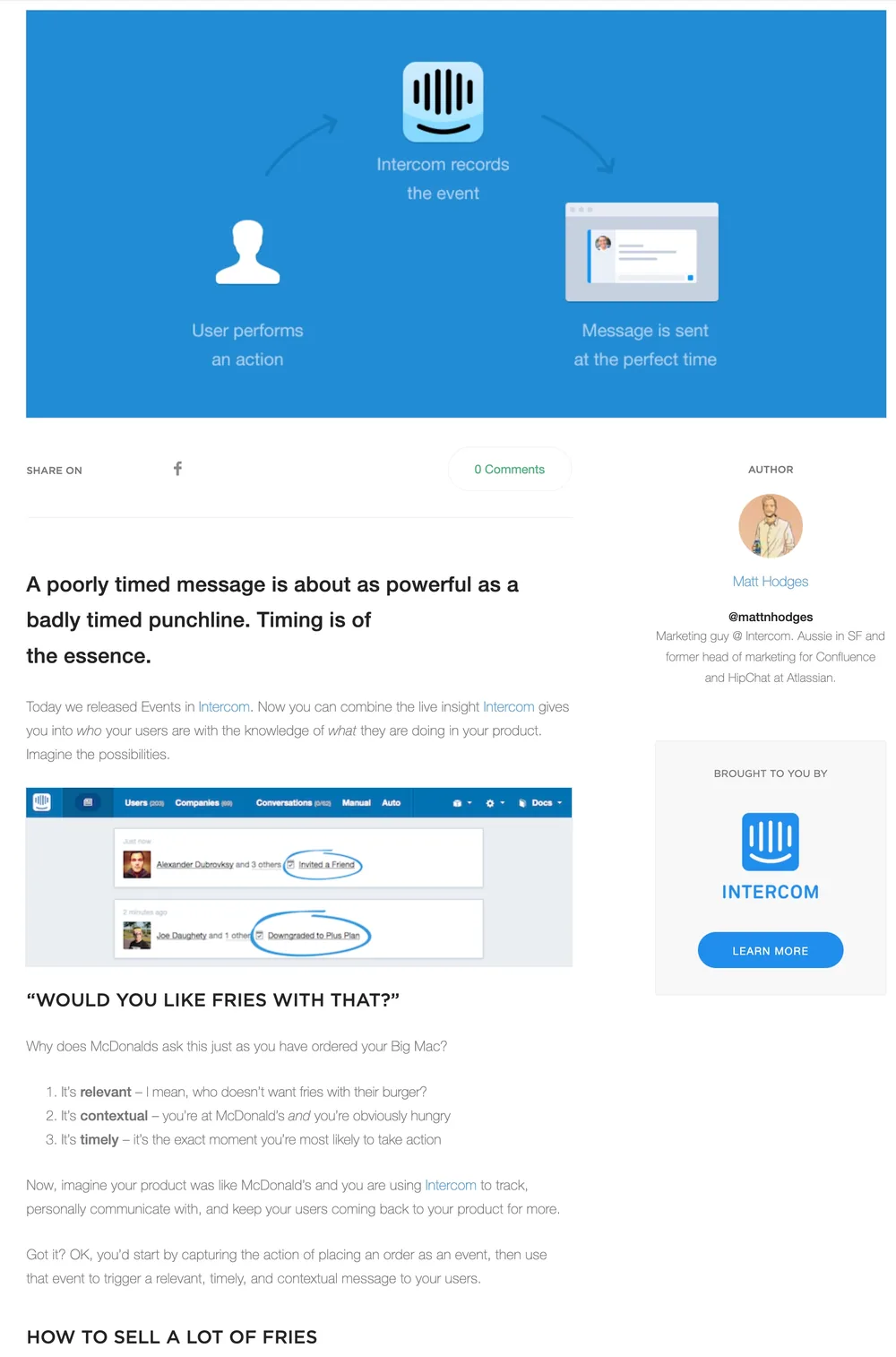
It focused on highlighting all the things people wanted to do because they understood the value in doing them. We used a real-life scenario that almost anyone could relate to as a metaphor to introduce the feature: “Would you like fries with that?”
Similarly, when we introduced the ability to send emails to more than one person with a WYSIWYG list builder and composer, we poked fun at the status quo process of getting an email out the door at the time.
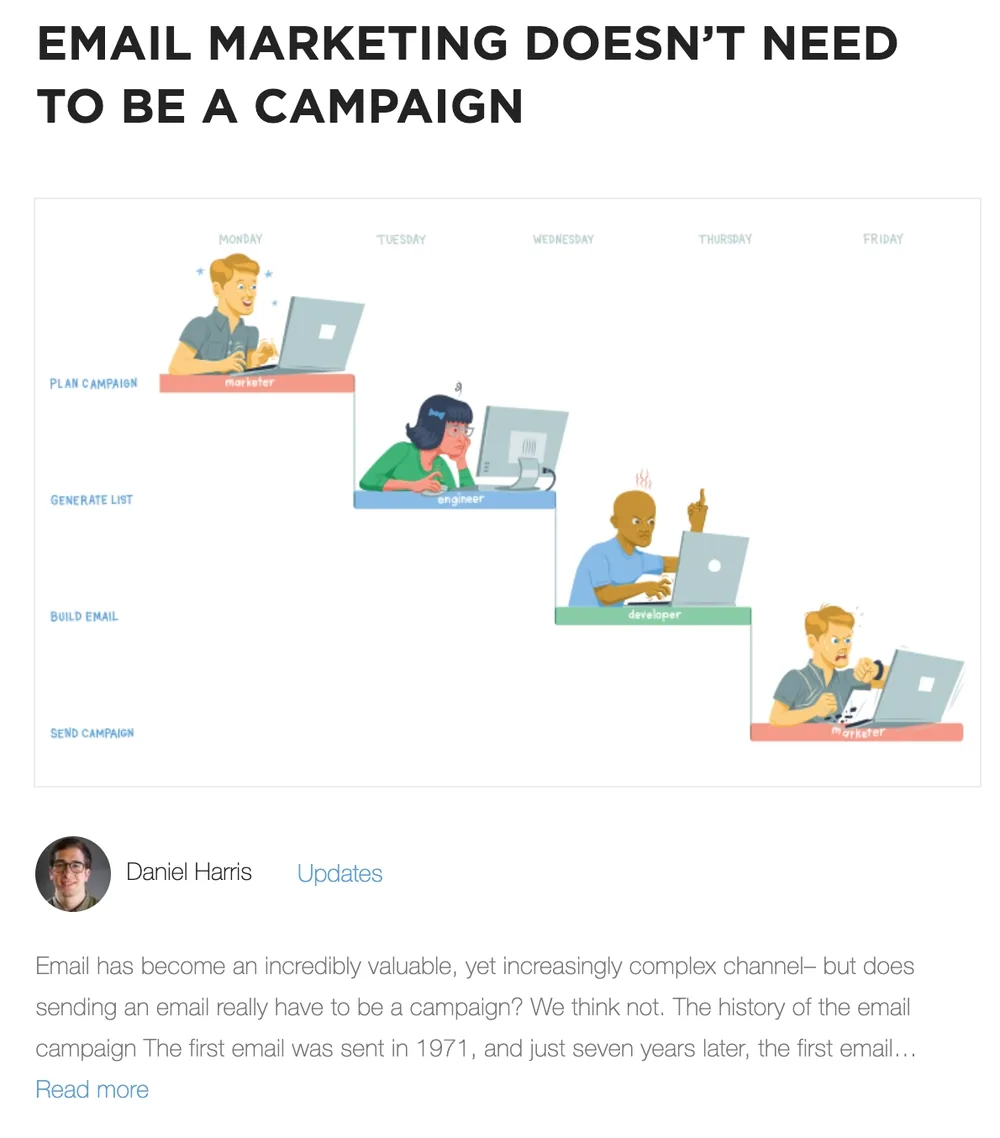
If you want to win, you need to fuel your marketing with premium-grade product, which means building the right things that enable a great story to be told so the right people take notice and are motivated to act.
But here's the catch: launches aren't about shouting every time you ship a feature. That's noise. Real impact comes from choosing the moments that matter, telling stories only you can tell, and making those launches land.
Here's how to do that.
The problem with “just ship it”
We've gotten addicted to the mantra: just ship it. And yes — shipping continuously is great for existing customers who already love you. But prospective customers? It's hard to see the forest through the trees, and too easy to tune out from all the noise.
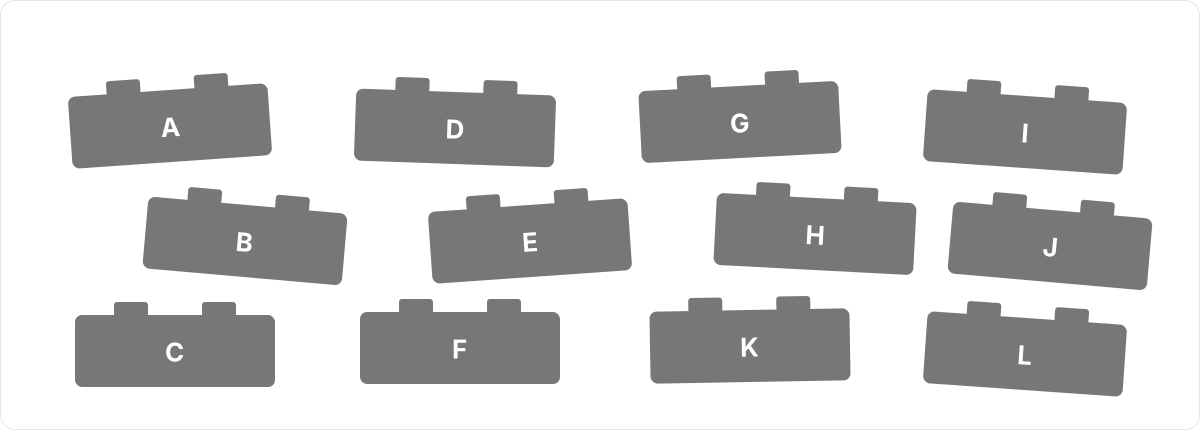
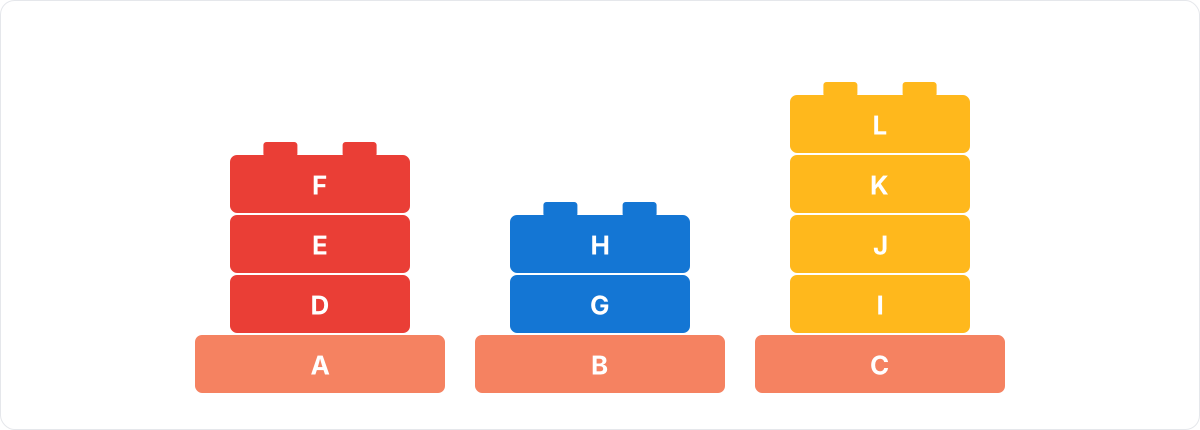
Each of these features is useful on its own, but when combined, the complementary features yield a result greater than the sum of their parts.
If you want launches to accelerate your growth, you can't simply provide people with these individual building blocks and expect them to figure out how they each fit together. Most won't. It would be like buying a box of Lego™ (or a puzzle) without a picture of the finished “product” on the front. Good luck.
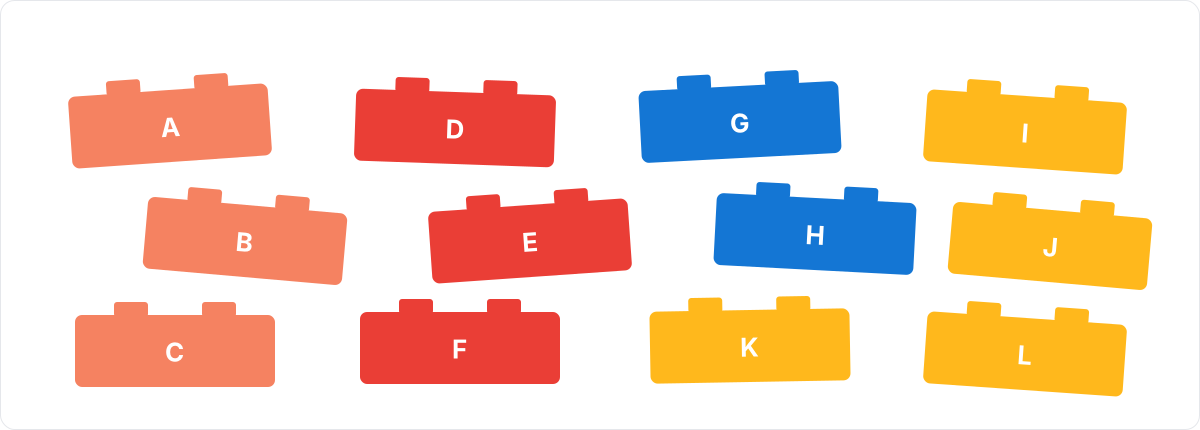
You need to paint the picture for them. You do that by telling great stories. Because that's what makes for a great product launch — from strategy to execution.
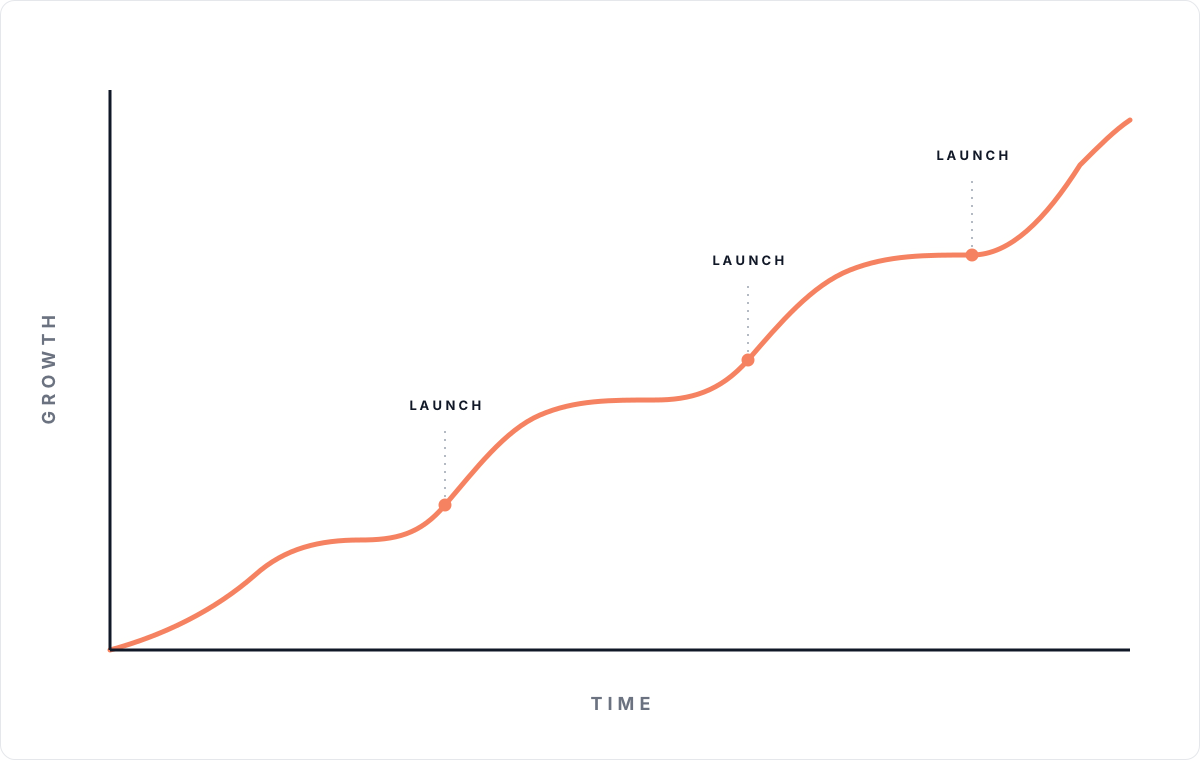
Launches, when done well, drive step-changes in growth
A good launch doesn't just give you a one-time spike — it resets your baseline. Stack enough launches, and growth doesn't stall; it compounds.
Telling stories no one else can
The trick is to find opportunities to combine individual things you plan to ship (or have already) into a bigger story. Sometimes that means bundling new features. Sometimes it means reframing what's already on the shelf. Sometimes it's both. Either way, the goal is differentiation: showing how users can now do something they care about that they couldn't do before.
Example: Intercom Conversation Ratings, which shipped in 2016. Measuring CSAT wasn't new when it shipped — Zendesk (and every other help desk) already did that. What was unique was how it could be used with existing features (e.g. Inbox Rules, In-App Messages) to enable businesses to act on it: escalating unhappy customers, triggering proactive messages, etc. That was a story only Intercom could tell.
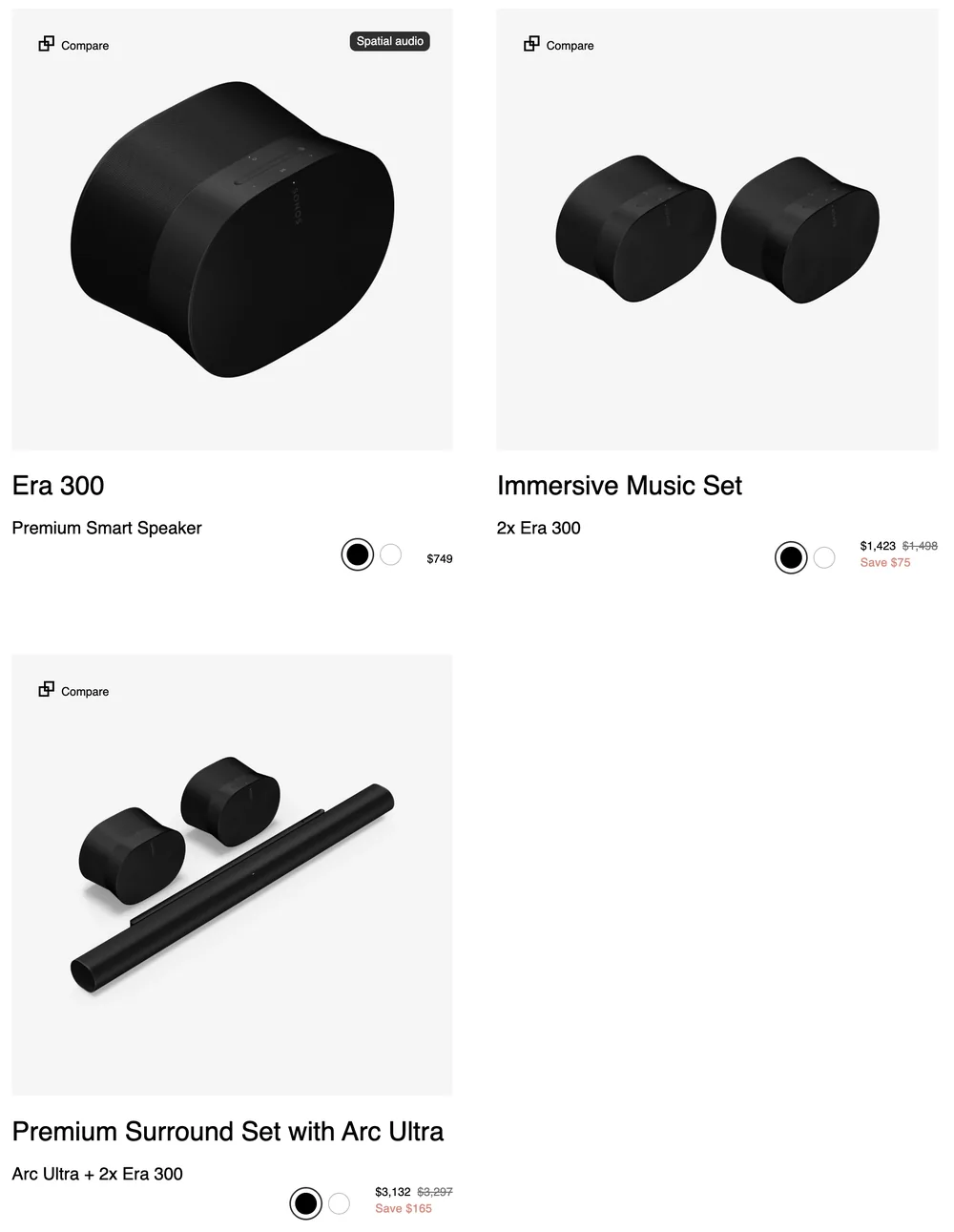
Or take Sonos. When they launched the Era 300 speaker, they didn't just start selling a new Premium Smart Speaker. They started selling an Immersive Music Set… and an Ultimate Immersive Set. Era, on its own, has standalone value, but when combined with other products in its speaker family, it solves a different problem and amplifies them (pun intended).
The same applied to Clarify. Individual features were valuable on their own, but when tied together in a way that unlocks a new workflow or makes something 10 times easier/cheaper? That's when the magic happens.
From features to narratives
Take Ask (meetings/deals). Customers loved it, but it was a commodity feature in most products that have meeting recording capabilities. On its own, it's not likely to drive someone to stop using Granola/Fathom/Attio. But, frame it as an AI assistant that helps a seller plan for a day of back-to-back calls or closing out their day by sending personalized, contextual follow-ups, and suddenly, you have a story that sets Clarify apart.
Or AI Fields. On its own, they're valuable. But probably not enough to make someone rip out Clay/Notion/Attio. If, instead, Clarify bundled AI Fields with complementary features like Workflows and Sequences, suddenly they aren't selling “yet another enrichment tool.” They're telling a bigger story. Something buyers want because gluing together and managing tools from multiple vendors is a massive PITA.
From narrative to priority
Once you have crafted the story you want to tell — grounded in job stories — you need to determine the right level of effort based on the intended outcome of the launch.
Not every new feature deserves a landing page. Not every update warrants emailing leads. Not every launch needs a slick video. If we treat everything the same, we'll quickly exhaust our audience (and ourselves).
Here's a simple framework you can use. On one axis, you have value — is the update most valuable to existing customers, or does it have the potential to attract new customers? On the other, you have innovation — are you playing catch-up to existing solutions in the market, or is this an entirely new solution to a problem that people have?
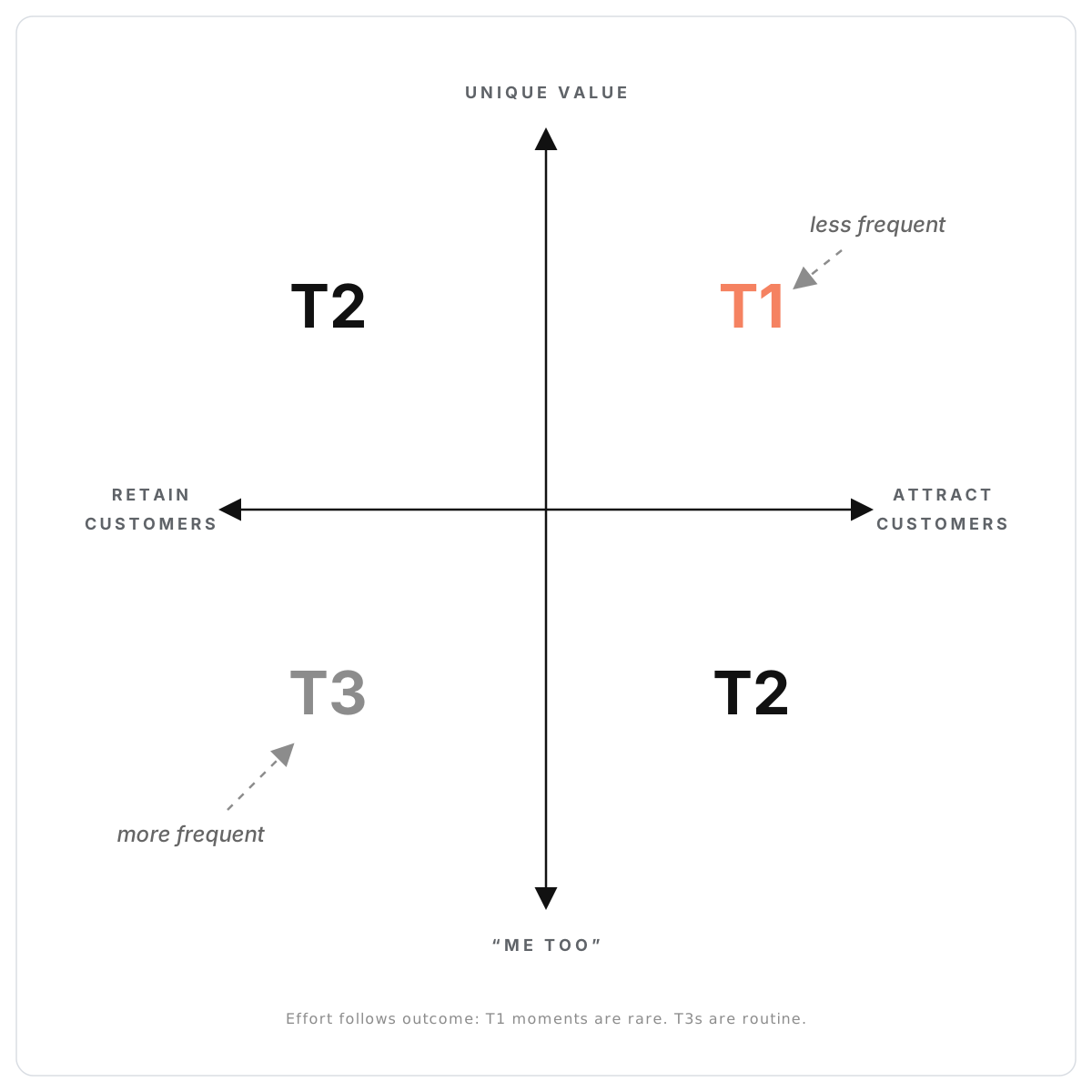
These are the moments that create step-changes in growth. Don't skimp. Go full court press.
Enough to delight customers and nudge prospects, but without the full megaphone.
Delight and educate existing customers. Don't waste your shot with prospective customers.
At the end of the day, if you treat everything you ship equally, you end up diluting the big moments. Too much noise, and people stop listening. Like that smoke alarm that won't stop beeping. Yeah, the one that you pulled the batteries out of.
Alignment (and good planning) is everything
The best launches happen when product and marketing start from the same story. If you build in one direction and market in another, you confuse your customers, dilute trust, and waste your efforts.
1. Start with the story
Before code gets written, product and marketing need to align on the story the market will hear. What problem(s) are you solving? Why does it matter now? How do you explain/demo it so people instantly get it?
That doesn't mean marketing dictates the roadmap. It means product and marketing co-author the message early, so the product actually delivers on its promise — and marketing can credibly amplify it later.
2. Use the story as a guardrail
Once you've got alignment, the narrative becomes your decision filter:
- If a feature doesn't serve the story, cut it or reframe it.
- If what you are building starts to veer off script, it risks diluting the message.
- When trade-offs arise (scope, timelines, resourcing), point back to the story to anchor decisions.
3. Make alignment a habit, not a one-off
Alignment can't just be a meeting on the calendar — it has to be part of how you build product:
- For anything that takes longer than 1–2 weeks, ideally you kick off with an early alignment session on the narrative.
- Bake in “narrative checkpoints” during development — mid-sprint, feature review, pre-launch.
- Keep marketing in the loop the whole way, not just at the finish line.
The payoff? Fewer last-minute surprises, fewer “wait, that's not what we agreed” moments.
4. Embrace healthy tension
Yes, achieving alignment can create friction. But that's good tension — it sharpens the story. The goal isn't to eliminate disagreement, but to channel it into refining the narrative instead of contradicting it.
When alignment and planning are in place, launches feel inevitable: the product solves the problem, the narrative resonates, and momentum compounds. Without it, even great features risk becoming noise.
Summing it all up
When you ship something that lives up to the promise — and your marketing amplifies the story — you get more than a launch spike. You reset the baseline. That's when alignment pays dividends: adoption exceeds expectations, the story spreads, and momentum compounds.

 © 2026 Matt Hodges · The PMM